
Modern Home Office Design Trends with Wooden Elements

More than ever before, home offices are evolving from functional cubicles into stylish, personalized, and productive spaces. Wooden elements play a central role in this transformation—bringing warmth, sustainability, and timeless appeal into modern home workspaces. Whether you’re redesigning your office from scratch or refreshing your current setup, embracing wood can elevate both aesthetics and performance.
In this article, we’ll explore the top home office design trends for 2025, supported by research, practical design parameters, and product examples from Multibey.
The Rise of the Warm, Natural Home Office
As remote work continues to grow, people are prioritizing comfort and well-being at home. Studies in workplace design show that biophilic elements, including natural wood and plants, can increase creativity by up to 15% and overall well-being by a similar margin.
Wood counters digital coldness with organic texture and visual warmth, making concentrated work feel more inviting and less stressful.
Why Wooden Elements Are Trending in Home Office Design
Modern home offices integrate wood for both functional and aesthetic reasons:
-
Natural warmth contrasts with high-tech devices.
-
Sustainable materials match eco-conscious lifestyles.
-
Textural depth prevents sterile, monotonous workspaces.
-
Visual continuity builds cohesive design.
In fact, wood components are a defining element in popular 2025 design movements like Scandinavian modern and Japandi, both of which emphasize neutrality, simplicity, and organic materials.
Popular Wooden Materials for Home Office Design
Selecting the right wood impacts both durability and appearance. Below is a comparison of common wood types:
| Wood Type | Appearance | Durability | Best Use |
|---|---|---|---|
| Walnut | Deep brown, rich grain | High | Desks, trays |
| Oak | Light, visible grain | Very high | Tables, shelving |
| Bamboo | Light with fine grain | Medium | Eco-friendly decor |
| Paulownia | Light, airy grain | Medium | Drawer organizers |
| Ebony | Dark, dense tone | High | Premium accents |
These options work well across modern office styles, from light Scandinavian palettes to darker mid-century accents.
Trending Wooden Office Furniture & Accents
Wooden Desks and Workstations
A modern workstation balances function with minimalism. When choosing a desk:
Design Parameters
| Feature | Recommended Range |
|---|---|
| Desk Depth | 600–800 mm |
| Desk Height | 730–760 mm |
| Surface Finish | Matte or natural oil |
Natural wood surfaces reduce glare and tactility, helping sustain long work sessions.
Wooden Organization & Storage
Effective storage keeps your office tidy and enhances productivity. Multibey offers a range of wooden organizers that combine minimalist design with efficient storage:
-
Burnt Paulownia Wood Desktop Drawer Organizer – Multibey: Solid paulownia wood with modular stackable design ideal for small item storage.
-
North American Black Walnut Wooden Desktop Stapler – Multibey: Adds a practical yet stylish accent to workspace accessories.
-
Explore more versatile options in Multibey Wooden Desk Organizers collection.
Wooden Tech & Workspace Supports
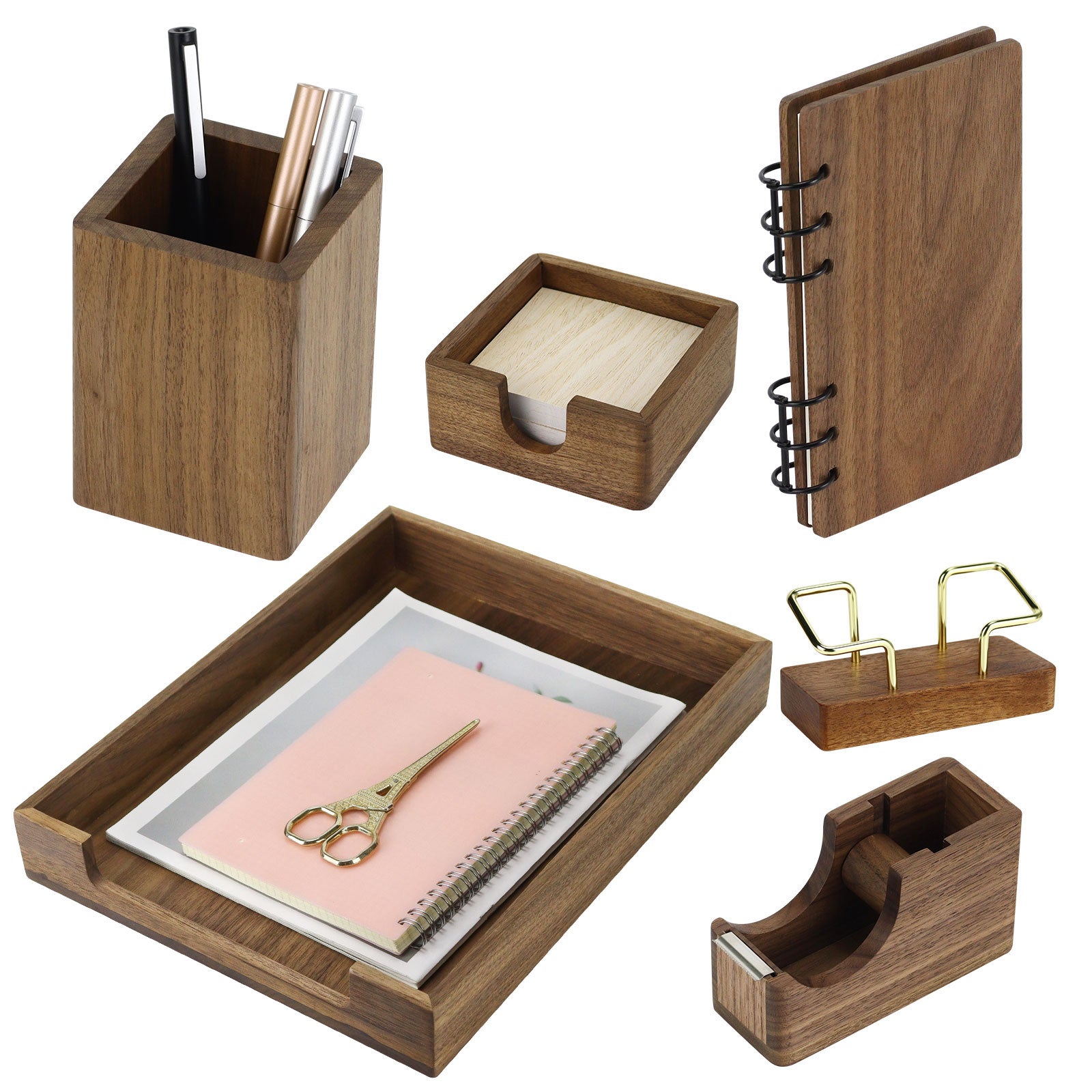
Desk accessories like wooden document holders, pen trays, and notebook covers enrich the workspace while maintaining cohesion with larger furniture pieces. These wooden accents help tie the room together visually and functionally.
Multibey Examples
| Accessory | Material | Function |
|---|---|---|
| Wooden Desk Valet Tray | Acacia wood | Organizes phone, glasses, pens |
| Walnut Wood A4 Paper Tray | Walnut | Holds documents & files |
| Wooden Sticky Note Holder | Walnut/Bamboo | Keeps notes accessible |
These carefully crafted pieces add warmth without clutter.
Popular Design Styles with Wooden Elements
Scandinavian Modern
Light wood tones with clean lines, white walls, and minimal clutter define this trend. Visual simplicity supports clarity and fresh energy.
Japandi (Japanese + Scandinavian)
This hybrid emphasizes natural materials, low furniture profiles, and neutral palettes. It celebrates craftsmanship and quiet sophistication.
Mid-Century Modern
Feature darker woods and angled furniture forms for a design that marries vintage charm with modern function.
Lighting Trends for Wooden Home Offices
Lighting plays a key role in showcasing wood’s texture:
| Lighting Choice | Best Use |
|---|---|
| Natural Daylight | Primary source |
| Warm LED (4000–4500K) | Reduces eye strain |
| Layered desk + overhead | Enhances depth |
Trend research highlights natural light prioritization as crucial in modern home office design, with spaces near windows gaining preference for both energy efficiency and mood benefits.
Smart Technology Integration
Smart home offices are seamlessly connected:
-
Wireless charging docks
-
Built-in cable management
-
LED task lighting with adjustable color temps
These features keep the desk clean while enhancing productivity.
Common Design Mistakes to Avoid
-
Too many wood tones can feel disjointed.
-
Ignoring ergonomics (e.g., poor desk height).
-
Lack of contrast, leading to flat visuals.
-
Neglecting lighting, which can make wood look dull.
Summary: Blending Wood with Modern Design
Wood balances modern technology with human-centered comfort. By combining natural materials, thoughtful layouts, and practical furniture choices, you create a home office that is both visually appealing and productive.
Whether you choose solid walnut accessories, versatile organizers, or custom wood desks, the right wooden elements help define your workspace story. Explore how Multibey products can enrich your home office design and unify style with functionality.
FAQs
Why are wooden elements popular in modern home office design?
Wooden elements add warmth, texture, and natural balance to modern home offices. They soften the look of technology-heavy spaces and support biophilic design, which can improve focus, comfort, and productivity.
What types of wood are best for a modern home office?
Popular choices include walnut for a premium look, oak for durability and light tones, bamboo for eco-friendly designs, and maple for clean, modern interiors. The best option depends on your style and usage needs.
How can I combine modern design with wooden furniture without looking outdated?
Use clean lines, simple shapes, and neutral color palettes. Pair wood with materials like metal, glass, or matte finishes to keep the design contemporary and balanced.
Is solid wood better than engineered wood for home offices?
Solid wood offers better durability, longevity, and natural grain patterns. Engineered wood can be cost-effective and stable but typically has a shorter lifespan and less visual depth.
What desk size is recommended for a modern home office?
A desk depth of 600–800 mm and a height of 730–760 mm works well for most users. These dimensions support ergonomic posture while maintaining a sleek, modern appearance.
How do wooden desk accessories improve workspace organization?
Wooden organizers help reduce visual clutter while keeping essentials accessible. They blend seamlessly with modern interiors and create a cohesive, professional look.
What color schemes work best with wooden home office furniture?
Neutral tones such as white, gray, beige, and black pair well with wood. These combinations highlight natural grain patterns while maintaining a modern, minimalist feel.
How important is lighting in a wood-based home office?
Lighting is critical. Neutral to warm LED lighting (around 4000–4500K) enhances wood textures, reduces eye strain, and creates a comfortable working environment.
Can wooden elements be used in small home offices?
Yes. Light-colored woods, floating shelves, and compact wooden organizers are ideal for small spaces, as they add warmth without overwhelming the room.
What are common mistakes when designing a wooden home office?
Common mistakes include mixing too many wood tones, ignoring ergonomic requirements, overusing heavy wood furniture, and failing to integrate proper lighting and cable management.
Are wooden home offices environmentally friendly?
When using sustainably sourced or FSC-certified wood, wooden home offices can be an eco-friendly choice. Bamboo and reclaimed wood are especially sustainable options.
Will wooden furniture remain a long-term trend in home office design?
Yes. Wood is considered a timeless material that adapts to evolving modern styles, making it a long-term investment rather than a short-lived trend.