
How to Organize Small Office Supplies with Desk Trays
Small office supplies are easy to ignore until they start slowing the workday down. Paper clips end up under notebooks, sticky notes disappear behind the monitor, USB drives get mixed with pens, and spare chargers sit in the same pile as receipts. A few loose items do not look like a serious problem at first, but over time they make the desk harder to use.
That is why how to organize small office supplies with desk trays is more than a styling topic. For home offices, reception desks, study spaces, and hybrid workstations, desk trays create simple storage zones that make everyday tools easier to find and easier to return after use.
At Multibey, we look at desk organization from a practical angle: a tray should not just look good on a desk. It should help people work with less friction. The right desk tray organizer for small office supplies can separate clips, sticky notes, memo cards, pens, adapters, and personal items without making the workspace feel crowded.
Why Small Office Supplies Need a Real Storage System
Small supplies create clutter because they do not naturally belong anywhere. A notebook has a shelf. A laptop has a stand. Documents may go into a folder. But paper clips, push pins, charging adapters, sticky note pads, business cards, and tape refills often float around the desk until they are needed.
That creates two problems. First, small items are easy to lose. Second, they create visual noise, even when the desk is technically “organized.” A shallow tray solves this by giving small supplies a fixed place without hiding them completely.
This matters more now because many workers split time between home and office. The U.S. Bureau of Labor Statistics reported that 35% of employed people did some or all of their work at home on days they worked in 2023, compared with 24% in 2019. More home-based work means more people need practical desk systems outside traditional corporate offices.
A tray-based system works because it is easy to maintain. You do not need a complicated filing method for paper clips and sticky notes. You need a few clearly defined zones.
What Is a Desk Tray?
A desk tray is a shallow storage accessory used to group office supplies, documents, stationery, tech accessories, or personal items on a desk or inside a drawer. Unlike a deep storage box, a tray keeps items visible and easy to grab. That makes it especially useful for supplies you use every day.
There are several types of trays, and each serves a different purpose. A paper tray holds A4 or letter-size documents. A valet tray stores keys, glasses, earbuds, and watches. A drawer tray hides backup supplies. A multi-compartment tray separates clips, notes, cards, and small tools.
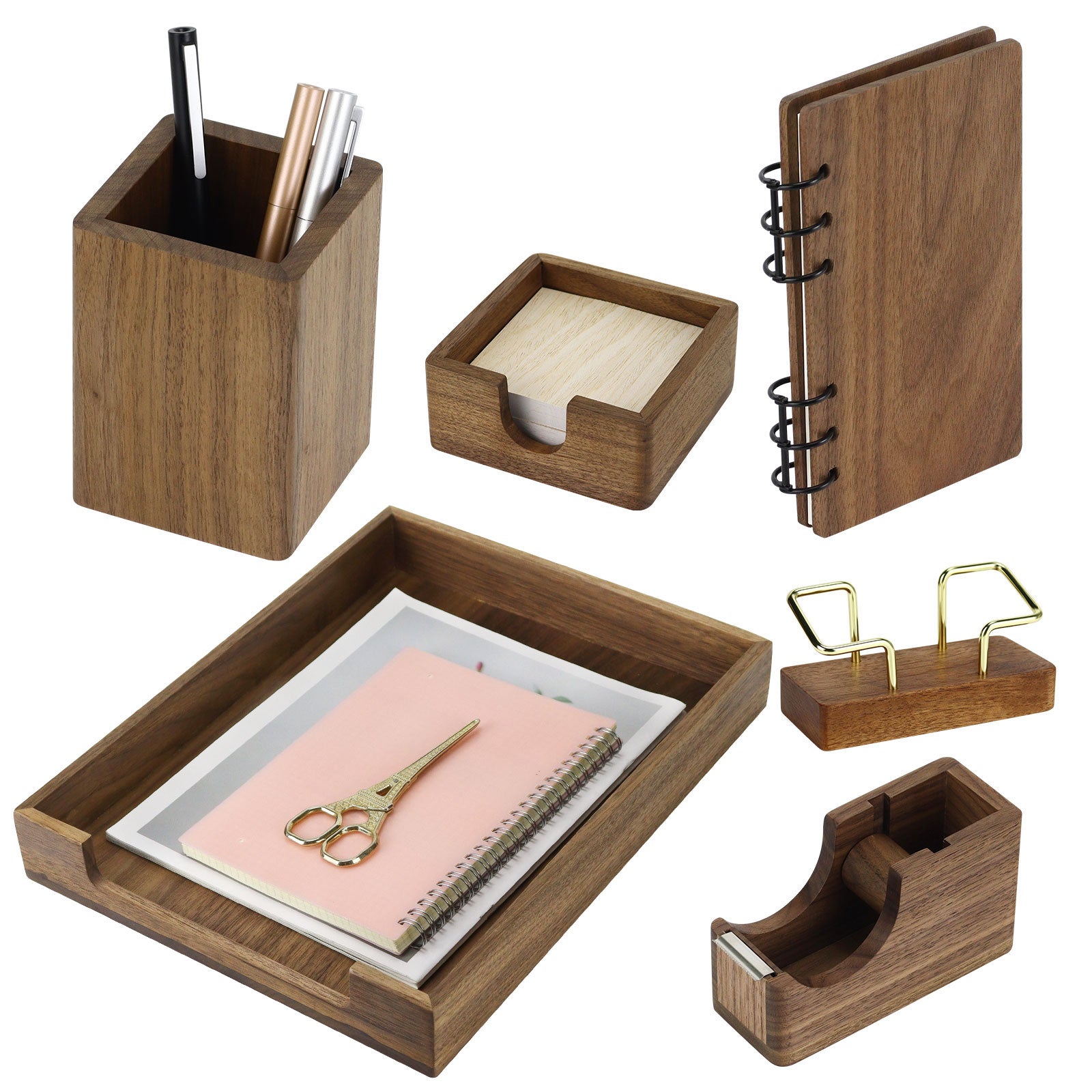
For example, Multibey wooden desk organizers collection includes solid wood organizers with compartments for pens, notes, and daily tools. For paperwork, the letter trays collection focuses on A4 files, documents, notebooks, and folders.
The best desk tray is not always the largest one. It is the one that matches the supply category you actually need to control.
Benefits of Using Desk Trays for Office Supplies
The main benefit of desk trays for office supplies is that they make organization visible. When everything goes into a closed drawer, it may stay hidden but still become messy. A tray gives structure without making daily tools hard to reach.
A good tray system also helps with daily reset. At the end of the workday, pens go back into one zone, sticky notes return to another, and personal items stay in their own tray. This reduces the mental load of cleaning the desk because every item has a clear destination.
Workplace design research also supports the value of intentional workspaces. Gensler’s 2023 global survey of 14,000 office workers found that 61% of employees said they need the office to feel most productive, but many workplaces still lack the right spaces for different work modes. A well-organized desk cannot solve every workplace problem, but it supports focused work at the individual level.
For B2B buyers, this matters because desk trays are not only decorative. They support employee workstations, client-facing counters, shared offices, and home office setups with a consistent visual standard.
Best Small Office Supplies to Organize with Desk Trays
Not every item belongs in the same tray. If one tray holds everything, it quickly becomes a junk drawer on top of the desk. The better method is to group small office supplies by category and frequency of use.
Use one shallow tray for paper clips, binder clips, push pins, and small stationery. Use another tray for sticky notes and memo pads. Keep USB drives, adapters, and card readers in a separate tech tray so they do not mix with paper supplies. If you keep keys, glasses, or earbuds on the desk, use a small valet tray near the front corner.
This system works especially well for small office supply organization ideas because it does not require much space. A compact desk can still hold one supply tray, one document tray, and one personal tray without feeling overcrowded.
Small Supply Sorting Guide
| Supply Type | Best Tray Style | Placement Tip |
|---|---|---|
| Paper clips and binder clips | Small divided tray | Keep beside pen holder or memo area |
| Sticky notes and memo pads | Flat shallow tray | Place near monitor or phone |
| USB drives and adapters | Dedicated tech tray | Keep near laptop or charging zone |
| Pens and markers | Long tray or pen holder combo | Place on non-dominant side |
| Keys, earbuds, glasses | Valet tray | Keep near front desk corner |
| Business cards and index cards | Low-profile card tray | Use on reception or client-facing desks |
A simple rule works well: if the item is small and used daily, it deserves a tray. If it is rarely used, it belongs in a drawer.
Types of Desk Trays for Small Office Supplies
Different tray styles solve different organization problems. For mixed supplies, a multi-compartment desk tray gives the best control because it separates items inside one footprint. This works well for paper clips, sticky notes, business cards, tape, and small tools.
A wooden tray adds warmth and works well in modern, minimalist, executive, and home office setups. A clear acrylic tray feels lighter visually and suits small desks. A stackable tray helps when vertical space matters, especially for documents or notebooks. A drawer tray keeps backup supplies hidden while still sorted.
Multibey 4-Compartment Walnut Wood Desk Organizer Tray is a useful example of a tray that can sort different small items in one place. For documents, the Walnut A4 Paper Tray is made for A4 papers, notebooks, and magazines, with a warm walnut look that suits professional desks.
The best choice depends on the work area. A reception desk may need a card tray and paper tray. A designer’s desk may need open trays for tools. A home office may need a document tray, tech tray, and valet tray.
Desk Tray Size and Parameter Guide
Size matters more than many buyers expect. A tray that is too deep hides small items. A tray that is too large takes over the desk. A tray that is too shallow may not hold clips, adapters, or sticky note pads securely.
For most small office supplies, a tray depth of 15–40 mm works well. It keeps items contained without making them hard to see. For paper trays, A4 or letter-size compatibility is essential. For valet trays, 150–250 mm wide usually works for keys, glasses, earbuds, and watches.
Multibey black walnut memo holder product pages show how compact desktop accessories can stay functional without taking much room. The 3 × 5 inch black walnut memo holder, for example, measures 6.1" L × 3.7" W × 1.4" H, which is a useful reference for compact task-card and note organization.
Desk Tray Parameter Table
| Tray Type | Recommended Size / Parameter | Best Use |
|---|---|---|
| Small supply tray | 120–180 mm wide | Clips, pins, erasers, USB drives |
| Medium desk tray | 180–250 mm wide | Sticky notes, cards, pens, small tools |
| Large mixed tray | 250–350 mm wide | Office tools or personal items |
| Compartment depth | 15–40 mm | Easy access without burying items |
| Paper tray | A4 or letter size | Documents, folders, notebooks |
| Valet tray | 150–250 mm wide | Keys, glasses, earbuds, watches |
| Drawer tray | Adjustable sections | Backup stationery and hidden supplies |
For B2B buyers, these parameters help prevent returns and poor fit. A tray should match the workstation, not just the product photo.
How to Organize Small Office Supplies Step by Step
Start by clearing the desk completely. Put every loose item into one group: pens, clips, paper, cards, sticky notes, adapters, personal items, and tools. This step shows what you actually own and what you use most often.
Next, sort by frequency. Daily-use supplies can stay on the desktop. Weekly-use supplies should go into a drawer. Rarely used items belong in a cabinet, storage box, or supply closet. This one decision prevents the desk tray from becoming overloaded.
Then assign each category a tray. Keep stationery in one tray, tech accessories in another, and personal items in a separate valet tray. Documents should go into a paper tray instead of mixing with small tools. If your desk is small, choose divided trays rather than several separate trays.
Finally, place trays in functional zones. Daily tools should sit near your dominant work area but not in the center. Paper trays should stay away from the keyboard. Personal trays work best near the front corner. Tech trays should sit near charging areas.
💡 Pro Tip: Do not organize by product type alone. Organize by how often the item is used. A beautiful tray full of rarely used supplies still creates clutter.
Desk Tray Organization Ideas by Workspace Type
A home office, executive desk, student desk, and reception counter do not need the same tray layout. The best setup depends on the tasks performed at that desk.
For a home office, we recommend one wooden supply tray, one document tray, and one valet tray. This covers most daily needs: stationery, paperwork, and personal items. For an executive desk, use walnut or other premium wood tones and keep the layout minimal. A paper tray, business card tray, and small valet tray are usually enough.
For a student desk, use a sticky note tray, pen tray, and drawer tray for extra stationery. For reception desks, keep business cards, appointment cards, forms, and clips organized but visible. For packing or small business workstations, trays should hold tape, labels, order notes, clips, and small tools.
Mini Case Study: Small Business Packing Desk
A small online shop used one open desk for packing, labeling, and customer notes. Before adding trays, tape, clips, thank-you cards, label rolls, and USB drives sat in one mixed pile. After switching to three trays—one for labels and cards, one for clips and small tools, one for active order notes—the packing desk became easier to reset between orders. The owner did not need more furniture; they needed clearer zones.
Best Materials for Desk Trays
Material affects both appearance and daily use. Wood feels warm, stable, and professional. Bamboo gives a lighter, eco-conscious look. Acrylic feels clean and visually light. Metal works well in industrial or high-use environments. Plastic suits budget storage, though it may look temporary in premium workspaces.
For Multibey product direction, wood works especially well because it combines organization with home and office décor value. A wooden tray can stay visible on a desk without looking like purely utilitarian storage.
Material Comparison Table
| Material | Appearance | Best For |
|---|---|---|
| Wood | Warm, natural, premium | Home offices, executive desks, giftable desk setups |
| Bamboo | Light, clean, eco-friendly look | Minimalist and sustainable workspaces |
| Acrylic | Clear, modern, lightweight | Small desks and visually open layouts |
| Metal | Strong, industrial | High-use shared office areas |
| Plastic | Affordable, casual | Temporary or budget storage |
| Leatherette | Soft, refined | Personal valet trays and executive desktops |
For B2B selection, wood and acrylic usually present better on client-facing desks. Plastic may work in supply rooms, but it rarely improves the appearance of a workstation.
Desk Tray Layout Tips for a Cleaner Workspace
A clean layout starts with restraint. Most desks do not need six trays. Two to four trays are usually enough: one for office supplies, one for papers, one for personal items, and one optional tech tray.
Keep the center of the desk open. The keyboard, notebook, and working area should not compete with storage. Place trays along the back edge or side zones. If you use a monitor, the area beneath or beside the monitor can hold a shallow tray for notes, clips, or cards.
Use matching materials or colors whenever possible. A walnut paper tray, walnut supply tray, and black monitor create a cohesive look. Mixing too many materials—plastic, chrome, acrylic, wood, and fabric—can make the desk look busier even if every item is organized.
Leave at least 40% of the desktop open. This is not a strict design rule, but it is a useful working guideline. Open space makes the desk easier to clean, easier to photograph, and easier to use during busy workdays.
Common Mistakes to Avoid
The most common mistake is using one tray for everything. That turns the tray into a shallow junk drawer. Separate supplies by category instead: stationery, tech, paper, and personal items.
The second mistake is buying trays that are too deep. Deep trays work for storage, but they make small items harder to see. For clips, USB drives, cards, and sticky notes, shallow trays work better.
Another mistake is keeping backup supplies on the desktop. If you have twenty pens, five sticky note pads, three chargers, and extra tape rolls, most of them should live in a drawer. The desktop should hold what you use today, not everything you own.
Finally, many people forget to reset the tray. A tray system only works if old notes, broken clips, dead pens, and outdated cards leave the desk regularly. Set a weekly five-minute reset. Remove what no longer belongs, wipe the tray, and return only active supplies.
Maintenance Tips for Desk Trays
Desk trays collect dust, paper fibers, ink marks, and small debris over time. A quick maintenance habit keeps them looking professional.
For wooden trays, dust weekly with a soft cloth and keep liquids away from the surface. If the tray has a natural wood finish, avoid harsh cleaners that may damage the grain or finish. For acrylic trays, use a soft cloth to prevent scratches. For metal trays, wipe fingerprints and check for moisture. For drawer trays, empty them monthly and remove duplicate or broken supplies.
Tray Maintenance Schedule
| Task | Frequency | Notes |
|---|---|---|
| Remove outdated notes | Daily or weekly | Prevents visual clutter |
| Dust tray surface | Weekly | Especially important for wood and acrylic |
| Wipe spills quickly | Immediately | Protects wood and paper supplies |
| Sort duplicate supplies | Monthly | Move backups to drawers or storage |
| Deep clean drawer trays | Monthly | Remove debris and damaged items |
| Review layout | Every 3 months | Adjust trays as work habits change |
A tray system should stay simple. If maintenance becomes complicated, reduce the number of items on the desk.
Related Reading
Conclusion: How to Organize Small Office Supplies with Desk Trays
The best way to organize small office supplies with desk trays is to keep the system simple: sort items by use, choose shallow trays for visibility, separate stationery from tech accessories, and keep personal items in their own tray. A good tray setup should make the desk easier to use, not just nicer to photograph.
For home offices, client-facing desks, reception areas, and small business workstations, wooden trays offer a practical balance of function and style. They group everyday tools, reduce visual clutter, and bring natural warmth to modern workspaces.
Explore Multibey wooden desk organizers to build a cleaner, more organized desk setup with trays and accessories designed for daily office use.