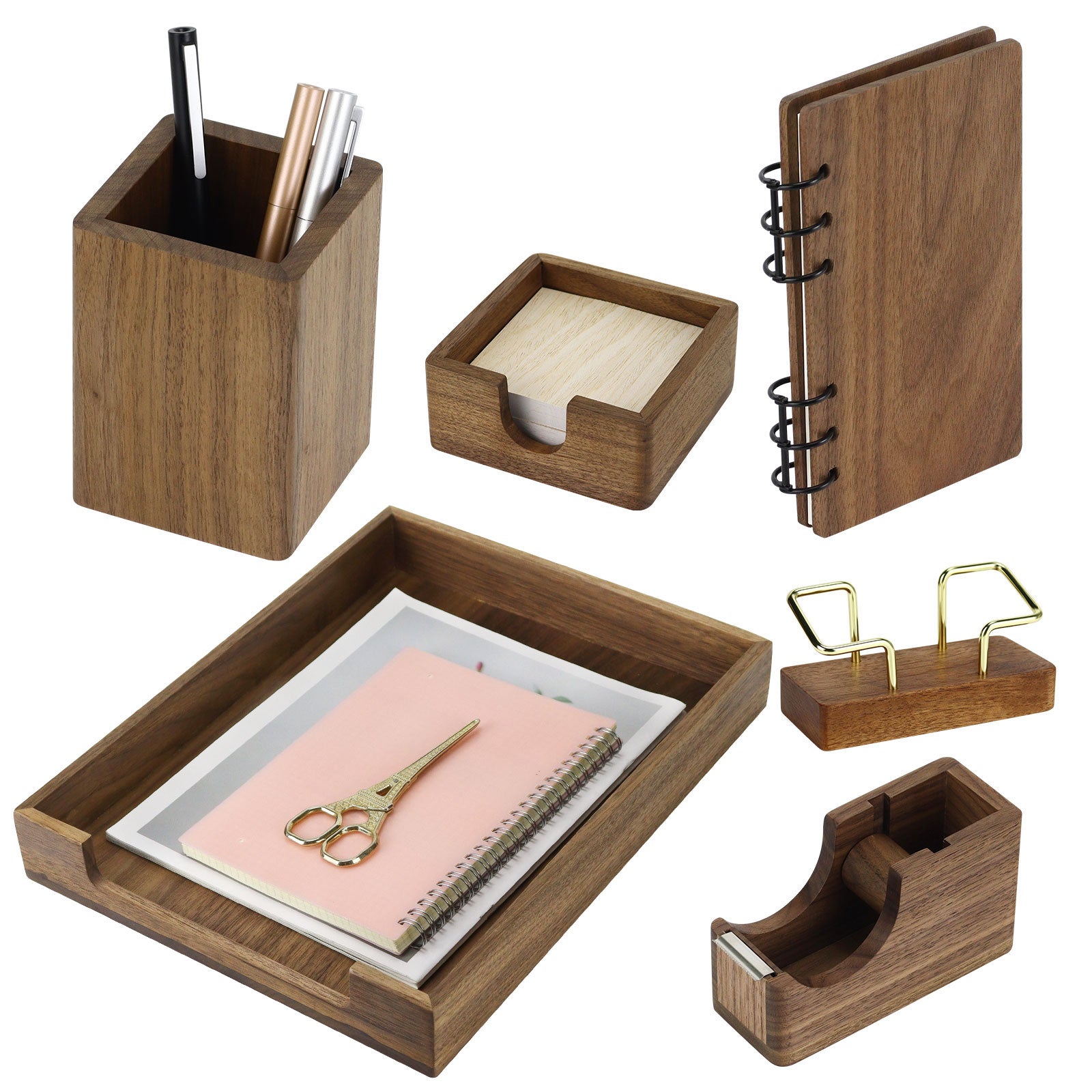

Why Walnut Wood Office Decor Is the Ultimate Desk Upgrade

Your desk is more than a surface; it is the cockpit of your career. In an era where the lines between home and office have blurred, the quality of your workspace directly influences your output. While trends in office decor come and go—from the sterile glass of the early 2000s to the industrial metal of the 2010s—one material has remained the undisputed king of the executive office: Black Walnut.
Walnut isn’t just a wood choice; it is a statement. Bridging the gap between old-world charm and modern minimalism, walnut offers a unique trifecta of unmatched aesthetic depth, heirloom-level durability, and proven psychological benefits.
Here is why swapping your laminate surface for walnut is the ultimate upgrade for your productivity and your peace of mind.
The Aesthetic: Why It Looks Expensive
Walnut carries an inherent luxury that other domestic hardwoods struggle to replicate. Unlike Oak (which often leans yellow) or Maple (which is creamy and pale), American Black Walnut (Juglans nigra) naturally possesses a sophisticated, dark tone without the need for chemical stains.
The Color Spectrum
Walnut offers a high-contrast visual experience:
-
Heartwood: Ranges from a deep, rich chocolate to a coffee-brown, sometimes with purple or reddish undertones.
-
Sapwood: The outer rings of the tree offer a creamy, tan contrast. High-end slabs often incorporate a streak of sapwood to prove the wood’s authenticity.
The "Patina" Phenomenon
One of the most unique technical characteristics of walnut is how it reacts to UV light. While most woods (like Cherry) darken over time, walnut gets lighter and warmer, eventually developing a lustrous, golden-brown sheen known as a "honey patina." This means your desk won't look worn out in ten years—it will look seasoned.
Functional Superiority: The Data
Why is walnut the preferred choice for high-end furniture makers? It occupies the "Goldilocks Zone" of physics: hard enough to survive daily abuse, but soft enough to be crafted into ergonomic curves.
To understand where walnut stands, we look to the Janka Hardness Scale, which measures the force required to embed a steel ball into the wood.
Table 1: Wood Species Comparison for Desk Use
| Wood Species | Janka Hardness (lbf) | Density ( kg/m ³) | Stability Rating | Best For... |
| Black Walnut | 1,010 | 610 | High | Premium desks, heirloom furniture |
| Hard Maple | 1,450 | 705 | Medium | Bowling alleys, heavy traffic floors |
| White Oak | 1,360 | 755 | Medium-High | Flooring, cabinetry |
| Pine | 380-420 | 350-400 | Low | Budget furniture, framing |
The Technical Takeaway:
-
Durability: At 1,010 lbf, walnut is resistant to dents from writing pressure or coffee mugs, yet it isn't so dense (like Maple) that it becomes impossibly heavy to move.
-
Stability: Walnut is exceptionally dimensionally stable. In an office environment filled with electronics generating heat, walnut is less likely to warp, twist, or shrink compared to softer woods like Pine.
The Psychological Edge: Biophilic Productivity
Upgrading to walnut isn't just vanity; it's biology. According to the principles of Biophilic Design, humans possess an innate tendency to seek connections with nature.
The "Cortisol" Effect
Studies in interior design psychology have shown that visible wood grain can have a physiological effect on the body.
-
Tactile Warmth: Unlike glass or metal, which feel cold and industrial, walnut has low thermal conductivity. It feels warm to the touch, making long typing sessions more comfortable.
-
Stress Reduction: Viewing natural wood grain patterns has been linked to lower blood pressure and reduced cortisol (stress hormone) levels compared to viewing plastic or synthetic surfaces.
The "Boardroom Effect": The dark, serious tone of walnut historically signals authority. Subconsciously, sitting behind a walnut desk anchors a chaotic workspace, signaling to your brain that it is time for "deep work."
Styling Your Walnut Workspace
Because walnut is a dominant visual element, it requires specific styling to ensure it doesn't make your room feel dark.
Lighting Parameters
To maximize the beauty of walnut, you must use the right lighting temperature. Walnut absorbs light, so you need illumination that highlights its red and purple undertones.
-
Recommended CRI (Color Rendering Index): 90+ (Essential for seeing the true depth of the grain).
-
Color Temperature: 3000K – 4000K.
-
Avoid: Cool daylight (5000K+) which makes walnut look flat and gray.
-
Avoid: Very warm light (2700K) which can muddy the contrast between the grain patterns.
-
The Style Archetypes
-
Mid-Century Modern (MCM): Pair your walnut desk with tapered legs, brass hardware, and Olive Green accents.
-
Dark Academia: Lean into the moodiness with a leather desk pad, antique brass lamps, and Navy Blue walls.
-
Scandi-Minimalist: Use the walnut as the only source of color in a room with matte white walls and gray felt accessories.
The Upgrade Ecosystem
A desk is a significant investment, but you can start small. The "Walnut Ecosystem" allows you to build a cohesive look over time.
-
The Centerpiece: A solid Walnut standing desk (look for 1.5-inch thickness for maximum stability).
-
Organization: Walnut monitor risers and "catch-all" trays.
-
Ergonomics: A mechanical keyboard wrist rest made of walnut offers breathable support that doesn't get sweaty like foam pads.
Sustainability: The Ethical Choice
In a world of "fast furniture," walnut is a champion of sustainability through longevity.
-
Carbon Footprint: Most Black Walnut is sourced from the North American Midwest. This results in a significantly lower carbon footprint regarding transportation compared to exotic tropical woods like Teak, Mahogany, or Rosewood.
-
The 50-Year Rule: Cheap particle board desks have an average lifespan of 3-5 years before the veneer peels or the screw holes strip. A solid walnut desk can last 50+ years. Buying one walnut desk keeps five cheap desks out of the landfill.
-
Certification: Always look for FSC (Forest Stewardship Council) certified vendors to ensure the wood was harvested from responsibly managed forests.
Maintenance: Keeping the Shine
Walnut is robust, but it is a natural material. Here is the cheat sheet for maintenance.
-
The Enemy: Standing water (coasters are mandatory) and direct, harsh sunlight (which accelerates fading).
-
The Routine: Dust with a microfiber cloth. Every 6-12 months, apply a coat of Danish Oil or Linseed Oil. This refreshes the sheen and waterproofing.
-
The "Hack": Got a small scratch? Rub the meat of an actual walnut (the nut) into the scratch. The natural oils in the nut are perfectly matched to the wood and will often hide the blemish instantly.
Conclusion
Walnut transforms a workspace from a "place you have to be" to a "place you want to be." It is an investment in your posture, your mindset, and your environment. Whether you start with a simple pen tray or commit to a full solid-slab standing desk, choosing walnut is choosing the executive standard.
Ready to upgrade? Start by assessing your lighting, clearing your clutter, and bringing the warmth of the woods into your daily grind.
FAQs
Why is walnut wood significantly more expensive than oak or maple?
Walnut is often called a "domestic exotic." It commands a higher price because the trees grow slower and are generally smaller than oaks or maples, resulting in less usable lumber per tree. Additionally, its high demand for premium furniture and cabinetry creates a market premium. However, its value tends to hold better than cheaper woods, making it an investment piece.
Should I choose Solid Walnut or Walnut Veneer for my desk
-
Solid Walnut: Best for longevity. It can be sanded down and refinished multiple times if scratched. It is heavier and more expensive but will last for decades.
-
Walnut Veneer: A thin slice of real walnut glued over plywood or MDF. It gives the look of walnut at a lower price point and is lighter. However, if you chip or deeply scratch the surface, it is difficult to repair, and you cannot sand it down.
-
Verdict: For a primary executive desk, Solid Walnut is the better long-term investment.
Is walnut wood eco-friendly?
Generally, yes—especially compared to tropical woods like Teak or Mahogany. American Black Walnut is sourced domestically in North America, reducing shipping emissions. To ensure sustainability, look for FSC (Forest Stewardship Council) certification, which guarantees the wood was harvested from responsibly managed forests.
Does walnut wood change color over time?
Yes, but in a unique way. While many woods darken (like Cherry) or yellow (like Oak) with age, walnut lightens. With exposure to UV light, the deep chocolate tones will slowly mellow into a rich, golden-honey amber. Many enthusiasts consider this "patina" even more beautiful than the fresh wood.
Is walnut too soft for a daily driver desk? Will it scratch?
Walnut has a Janka hardness rating of ~1,010 lbf. It is moderately hard—durable enough to resist dents from writing or coffee cups, but it can scratch if you drag sharp metal objects (like a laptop chassis with a rough foot) across it.
-
Recommendation: We always recommend using a leather or wool felt desk pad under keyboards and mice to protect the "high traffic" area of the desk.
Does walnut wood warp?
Walnut is one of the most dimensionally stable domestic hardwoods. It is very resistant to shrinking and swelling caused by humidity changes. This makes it an excellent choice for offices with computers and monitors that generate heat, where other woods might twist or crack.
What wall colors go best with walnut furniture?
Because walnut has warm, dark tones, it pairs beautifully with:
-
Moody/Dark: Navy Blue, Charcoal Grey, and Forest Green (creates a "Dark Academia" look).
-
Bright/Clean: Warm Cream or Off-White (creates a modern, high-contrast look).
-
Avoid: Bright yellows or oranges, which can clash with the wood's natural warmth.
What metal finishes match walnut hardware
-
Brass/Gold: The gold tones highlight the warm honey streaks in the walnut grain.
-
Matte Black: Creates a sleek, industrial, and modern contrast.
-
Silver/Chrome: Can work, but often feels a bit "cold" against the warmth of the wood.
How do I clean my walnut desk?
Avoid harsh chemical cleaners (like Windex or bleach). For daily cleaning, use a dry microfiber cloth to remove dust. For spills, use a damp cloth with a mild drop of dish soap, then dry immediately.
How often should I oil my desk?
If your desk has an oil finish (common for high-end slabs), you should re-apply a coat of Danish Oil or Linseed Oil every 6 to 12 months, or whenever the wood starts to look "thirsty" (dull).
Can I fix scratches on walnut without sanding the whole desk?
For minor surface scratches, you can use the "walnut meat" trick: rub the meat of an actual walnut nut into the scratch. The natural oils and color of the nut often match the wood perfectly, masking the scratch. For deeper scratches, a wax repair stick or a light spot-sand and re-oil will be necessary.